
Is the Tenniix Ball Machine Legit? The Honest Buyer’s Guide Before You Spend $1,000+
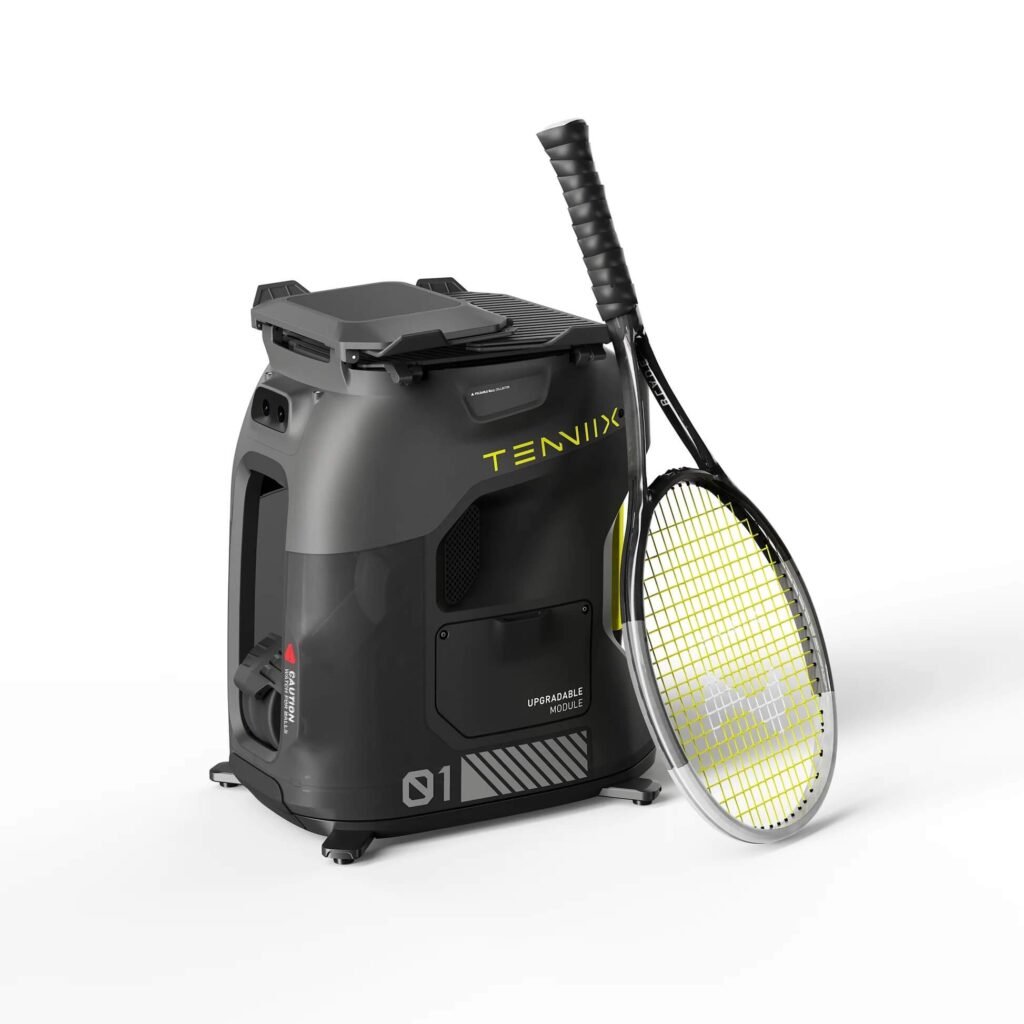
Key Takeaways
- Tenniix may be interesting, but legitimacy depends on the seller, warranty, support, and real ownership experience—not the ad copy.
- AI features can be useful if they save time and improve drilling consistency; they are useless if they make the machine harder to trust.
- A traditional machine with a strong track record often wins on reliability, parts, and serviceability.
- If you practice solo often, the best machine is the one that feeds predictably every time and is easy to recover when something goes wrong.
- Before you buy, verify reviews, return terms, battery life claims, and whether replacement parts are actually available.
Table of Contents
MySportsAdviser tests tennis gear for serious recreational players and coaches
We look at durability, training value, support experience, and whether the machine makes sense for real court use—not just for launch-day marketing. No fake hero worship. No brand fog.
What Tenniix is really selling
Tenniix is not just selling a ball machine. It is selling a feeling: modern, intelligent, and a little futuristic. That is attractive because every buyer wants the same thing—better practice with less hassle. The problem is that "smart" is not the same as "reliable." If you are comparing it to a Titan Ace-style machine, the contrast is obvious. Traditional machines usually win on a boring but important point: they do the job without needing a special story. They feed balls. They repeat drills. They stay understandable when something goes wrong.The promise
The promise is efficiency. Better drills. Smarter patterns. Less coach time spent on basic repetition. If Tenniix really delivers adaptive training, that can be useful for intermediate and advanced players who want targeted rhythm, movement, and decision-making work.The trade-off
The trade-off is complexity. More software means more things to fail. More features mean more room for sloppy execution. And when support is weak, the buyer becomes the unpaid quality-control department.First-time buyer: What if the online reviews are all marketing, affiliate content, or first-week impressions?
Dave - MySportsAdviser: Then you should treat them as signal, not proof. Look for repeated comments about feed consistency, battery life, return handling, and support response time. Real legitimacy shows up in the boring details that promo posts never emphasize.
What you should verify first
- Who the actual seller is and where service is handled
- Warranty length and what it really covers
- Return window and restocking conditions
- Whether replacement parts are available now, not "coming soon"
- Whether the app and drill modes are usable without a learning curve headache
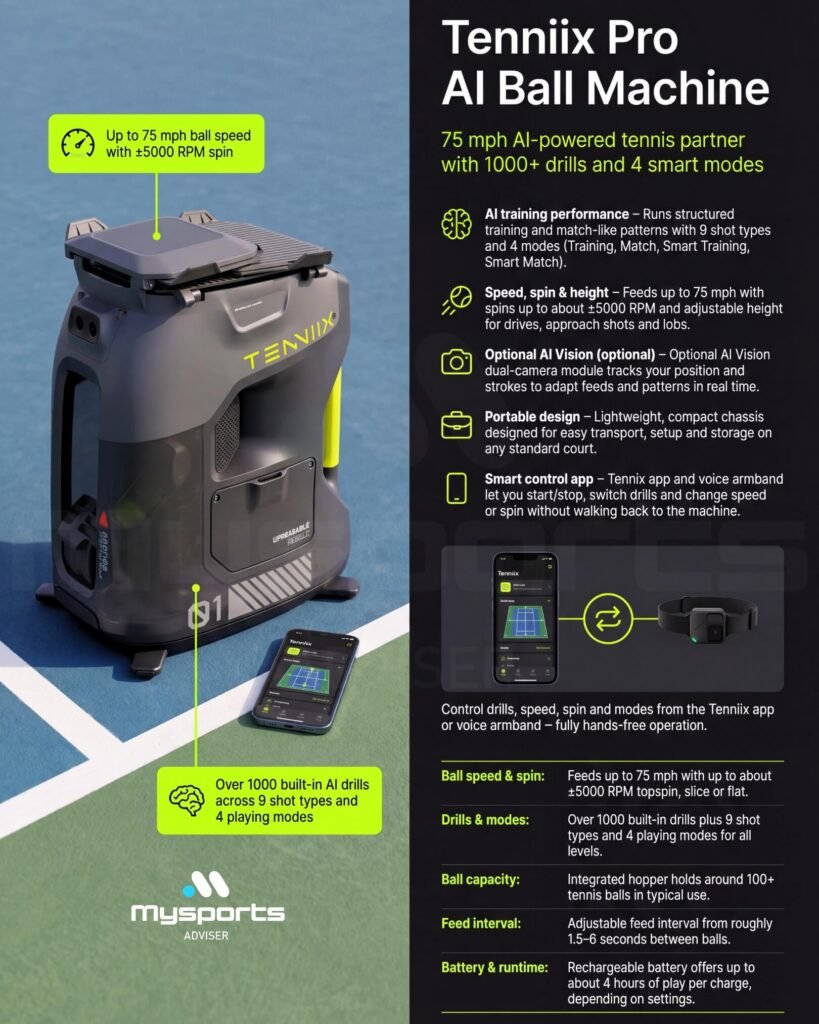
How to judge legitimacy without getting burned
Legit is not a vibe. Legit is a checklist. You want evidence that the company can deliver a machine, support it, and stand behind it when the real world gets messy. That is the whole game. And yes, the machine itself matters. But the company around the machine matters more. A great chassis with lousy support becomes a regret machine very fast.Three checks that matter most
Start with ownership history. New brands can be fine, but unproven brands require more proof. Then check support channels. Then check service and parts. If any of those are vague, you are taking on risk that established brands have already priced and operationalized. Here is the blunt truth: a machine can look advanced and still be a bad buy if you cannot get help when the feed wheel wears down or the software gets weird. Nobody wants to become a troubleshooting hobbyist on week three.A mini-story from the court
Imagine a college rec player who buys a flashy smart machine because it promises adaptive drills. The first sessions are fun. Then the battery estimate gets optimistic, the app needs resets, and the player starts spending more time managing the machine than hitting forehands. That is not innovation. That is admin. A legit purchase removes friction. A weak purchase adds it.First-time buyer: What is the biggest red flag with a new tennis ball machine brand?
Dave - MySportsAdviser: Vague support and unclear parts availability. If you cannot find a clear warranty, a real service path, and credible owners describing long-term use, that is not a machine problem yet—that is a buying risk.
Features vs. real training value
This is where buyers get tricked. They see feature lists and assume more features equal more value. Not even close. A feature only matters if it improves your court time in a way you actually feel. The right question is simple: does the feature make the machine better at producing repeatable, useful practice? If the answer is yes, good. If the answer is "nice demo video," move on.Want the machine that matches your real training style, not just your wishlist?
TENNIIX PRICEFirst-time buyer: Are the smart features worth paying extra for?
Dave - MySportsAdviser: Only if you will use them every week and they genuinely improve drills. If you mostly want dependable feed patterns, simple controls, and low maintenance, a traditional machine can deliver better value per dollar.
Feature-to-benefit thinking beats spec chasing
Ball speed, spin, and capacity matter, but only as tools. What you really buy is the kind of session your machine creates week after week.
AI helps when you want better court habits
Tenniix's appeal is that it can nudge you into more realistic movement patterns. That means more recovery work, more anticipation, and more pressure on your fitness between shots.
Define your training outcome
Decide whether you want stroke repetition, match realism, or both. That single choice filters most of the noise.
Match the machine to your tolerance for complexity
If you dislike apps, sensors, or calibration, a traditional machine will feel better every week you own it.
Choose the model you will actually use
The best tennis ball machine is the one that removes excuses and gets used twice a week, not twice a month.
The sharp line
Here is the line nobody wants to say out loud: a premium-looking machine with fragile execution is still a fragile machine. A simpler model with excellent consistency is often the smarter buy for players who actually train, not just browse specs.Tenniix vs. traditional machines
This is the real decision point. Do you want bleeding-edge features, or do you want the boring machine that quietly does its job for years? Both can be valid. But they serve different buyers. For intermediate and advanced players, the answer often comes down to usage style. If you need solo training with structured movement and you love experimenting with modern drills, Tenniix may be interesting. If you want set-and-forget reliability, proven feed patterns, and easier service confidence, traditional models still have the edge. If you are asking me where the smart money goes for most players, I lean toward the machine with the stronger track record unless Tenniix clearly proves its support, durability, and user experience. Fancy is not a warranty. And that is the honest take. Buy the future only when the future has a service department.First-time buyer: If Tenniix is newer, why would anyone buy it at all?
Dave - MySportsAdviser: Because some buyers want smart training features, modern controls, and a more dynamic practice style than a basic feeder can offer. The point is not to avoid Tenniix automatically—it is to make sure the extra capability is real and the company behind it is solid.
Frequently Asked Questions
Is the Tenniix ball machine legit?
It can be legitimate as a product concept, but legitimacy for you depends on the seller, warranty, service support, and verified real-world performance. For a $1,000+ purchase, those details matter as much as the feature list.Is Tenniix better than a traditional tennis ball machine?
Not automatically. Traditional machines often win on reliability and serviceability, while Tenniix may appeal more if its AI features genuinely improve your drills. Which one is better depends on your tolerance for risk and your training style.What is the biggest risk when buying a new brand like Tenniix?
The biggest risk is weak long-term support: unclear parts access, slow response times, or a warranty that sounds better than it functions. That is what turns a cool machine into a frustrating purchase.Should I choose Tenniix or Titan Ace?
Choose Tenniix if you want a more modern, feature-forward experience and you have verified the support behind it. Choose Titan Ace if you want a more traditional, dependable model with less uncertainty. Most cautious buyers will prefer the proven path.How do I avoid buying the wrong machine?
Check real customer reviews, confirm warranty terms, ask about replacement parts, and compare the machine against established alternatives before you click buy. If the company cannot answer basic ownership questions clearly, walk away.Buying a ball machine is a trust test
The best purchase is the one that keeps feeding balls, keeps support reachable, and keeps your practice moving. If Tenniix clears that bar, it deserves attention. If it does not, your money belongs with a more proven model.

As a Sports Technology Analyst, Dave Court focuses on the intersection of performance, data-driven insights, and modern sports technology across multiple disciplines. With hands-on expertise in tennis and pickleball performance analysis, as well as experience in evaluating sports equipment, training systems, and active lifestyle solutions, he delivers practical, experience-based insights. Dave also creates expert content around sports-focused travel, training environments, and performance-oriented destinations, helping readers make informed decisions both on and off the field.
Choose the machine that protects your practice time, not just your curiosity.
Prices, support terms, and availability can change. If you want the safest move, verify the seller and the warranty before you commit.
Compare Trusted Ball MachinesAbout the author: