AI vs Traditional Tennis Ball Machine: Pongbot Pace S Pro vs Spinshot Plus 2 vs Titan Ace
Key Takeaways
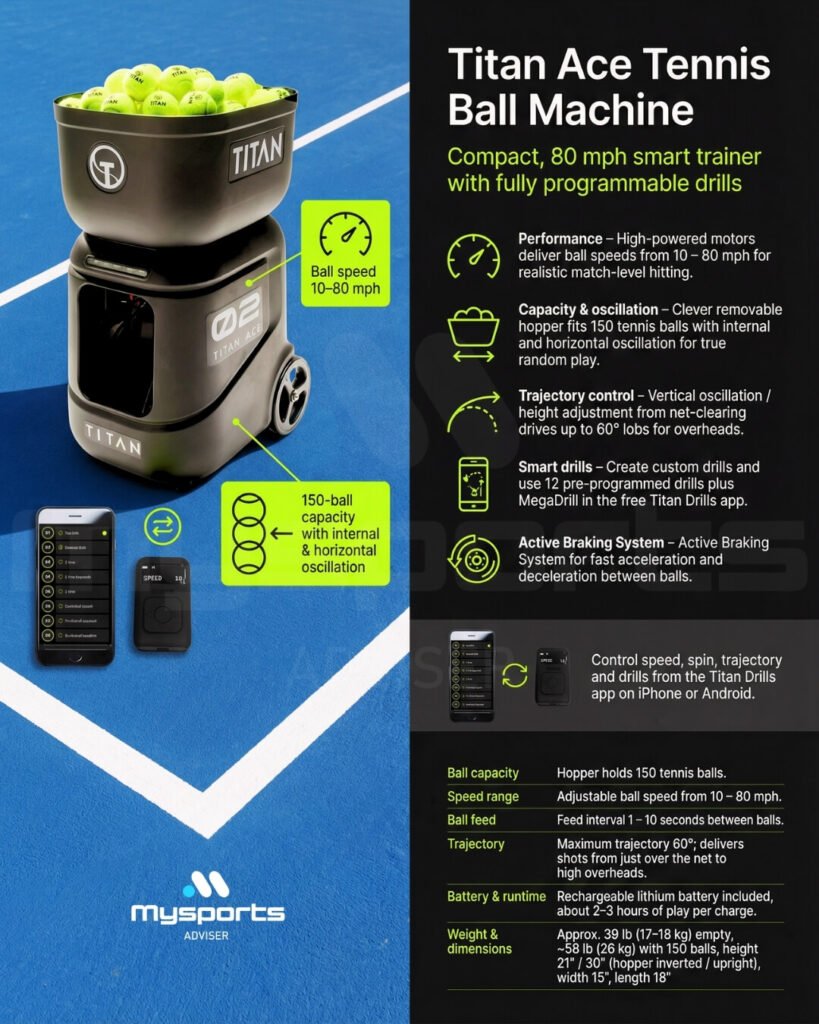
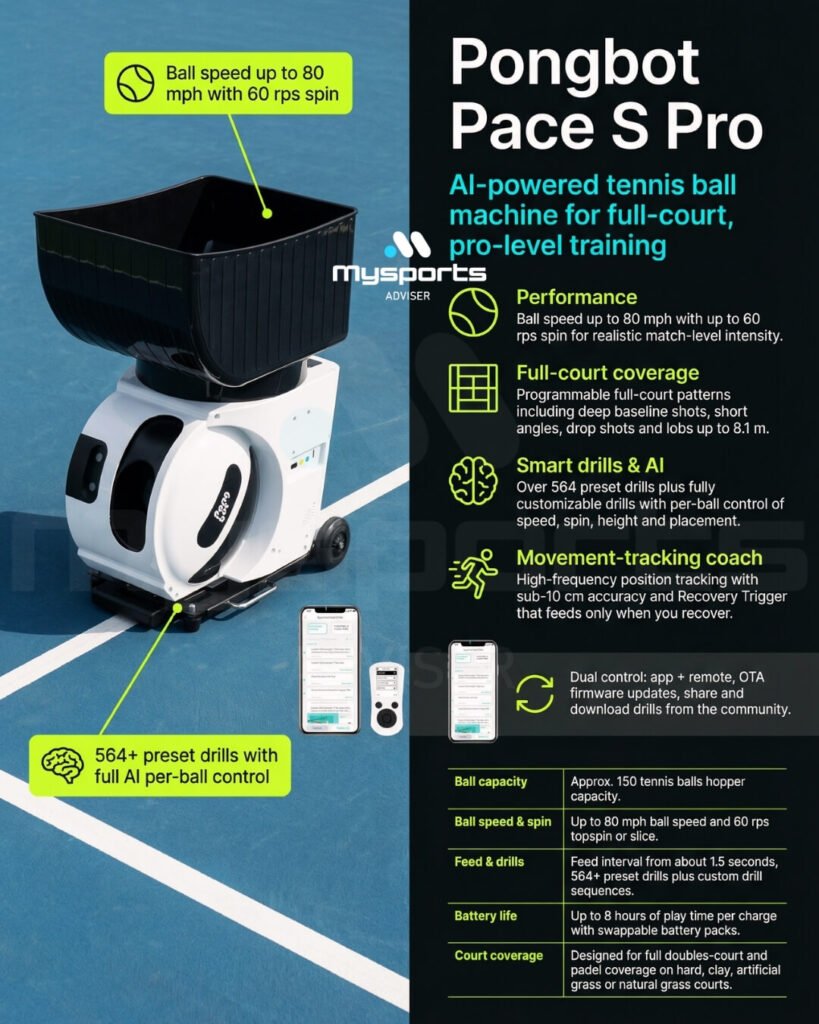
- Pongbot Pace S Pro is the most advanced option if you want adaptive, data-driven solo training.
- Spinshot Plus 2 is the safer value pick if you want programmable drills without app-heavy complexity.
- Titan Ace is the simplest traditional choice if you care most about durability and straightforward operation.
- AI features matter most when you train alone often and want more match-like reactions, not just ball repetition.
- Your best machine is the one you'll use consistently for months, not the one with the longest spec sheet.
Table of Contents
Built for serious recreational and competitive players who train alone often
This guide is written from a performance-first buying angle: compare the training outcome, the setup burden, the support risk, and the real value per session before you spend on a tennis ball machine.
Who this choice is really for
If you are a serious recreational player, a junior competitor, or an adult league player training without a steady hitting partner, your machine has one job: make solo practice feel useful instead of mechanical. The Pongbot Pace S Pro is for you if you want your machine to react, adapt, and push you into more realistic footwork and recovery patterns. The Spinshot Plus 2 and Titan Ace are for you if you want repeatability, predictable operation, and a cleaner ownership experience. Imagine this... you arrive at the court with 45 minutes before sunset. With a traditional machine, you can run excellent drills, but they still come from one place and often follow a pattern you already know. With an AI machine, the session can feel less like a loop and more like a live problem to solve. That difference matters most if your training goal is not just stroke groove, but decision-making under pressure. That is the fork in the road.Pongbot vs Spinshot vs Titan: what changes in real training
The biggest gap is not raw ball speed. The biggest gap is whether the machine merely feeds balls or whether it helps you train against changing patterns. Pongbot Pace S Pro aims at the first category of true AI tennis training: it tracks movement, adapts feeds, and tries to simulate more match-like responses. That can be a real edge for players who want realism, recovery work, and less predictable court coverage. Spinshot Plus 2 sits in the classic programmable lane. You get a trusted tennis ball machine format with drill variety, usable customization, and a familiar control model that many players can learn quickly. Titan Ace leans even more into the no-nonsense traditional promise: durable feeds, straightforward controls, and a lower-friction buy. Simple does not mean weak. Smart does not mean useful.Want the machine that matches your real training style, not just your wishlist?
SPINSHOT US PRICEFirst-time buyer: Isn't AI just a gimmick if I already get good drills from a programmable machine?
Dave - MySportsAdviser: For pure repetition, yes, a good traditional machine is enough. AI matters when you want the machine to challenge your movement, positioning, and decision-making instead of just your swing.
Feature-to-benefit thinking beats spec chasing
Ball speed, spin, and capacity matter, but only as tools. What you really buy is the kind of session your machine creates week after week.
AI helps when you want better court habits
Pongbot's appeal is that it can nudge you into more realistic movement patterns. That means more recovery work, more anticipation, and more pressure on your fitness between shots.
Define your training outcome
Decide whether you want stroke repetition, match realism, or both. That single choice filters most of the noise.
Match the machine to your tolerance for complexity
If you dislike apps, sensors, or calibration, a traditional machine will feel better every week you own it.
Choose the model you will actually use
The best tennis ball machine is the one that removes excuses and gets used twice a week, not twice a month.
Make the buy based on future use, not excitement
The machine you keep using six months from now is the one that matters, because that is the one changing your game.
The elephant in the room: reliability and long-term ownership
This is the part buyers skip, and it is the part that decides regret later. Traditional machines like the Spinshot Plus 2 and Titan Ace have the advantage of mechanical simplicity. Fewer software dependencies usually mean easier maintenance, clearer repair paths, and more confidence that the machine will keep doing its job years down the road. AI-powered machines are more exciting, but they also carry a new kind of ownership risk. More electronics, more sensors, and more software can mean more points of failure. If a sensor drops, an app breaks, or support changes, the whole experience can become less "training tool" and more "tech project." That is the trade-off. More realism often means more risk. For first-generation AI ball machines, that matters a lot. A traditional tennis ball machine is easier to understand, easier to service, and easier to trust if you want something that just works every week. The AI promise is real, but it is still early enough in the product cycle that long-term reliability is not yet as proven as classic models. There is also a support question. A strong machine is not only about speed and spin; it is about spare parts, repairability, and whether the company will still support the product when you need help.First-time buyer: What if the AI features stop working or the app becomes a headache?
Dave - MySportsAdviser: Then you lose part of what you paid for, which is why you should treat AI as a calculated upgrade, not a guaranteed long-term safer buy. If you want the lowest-maintenance path, traditional still wins.
First-time buyer: Are traditional machines still enough for serious training?
Dave - MySportsAdviser: Absolutely. A good programmable tennis ball machine can still build consistency, footwork, timing, and shot tolerance very effectively if you set the drills well.
A practical reliability filter
Ask yourself three blunt questions: do you want the newest experience, the cleanest ownership, or the safest five-year bet? Those answers usually point to the right machine faster than any spec sheet.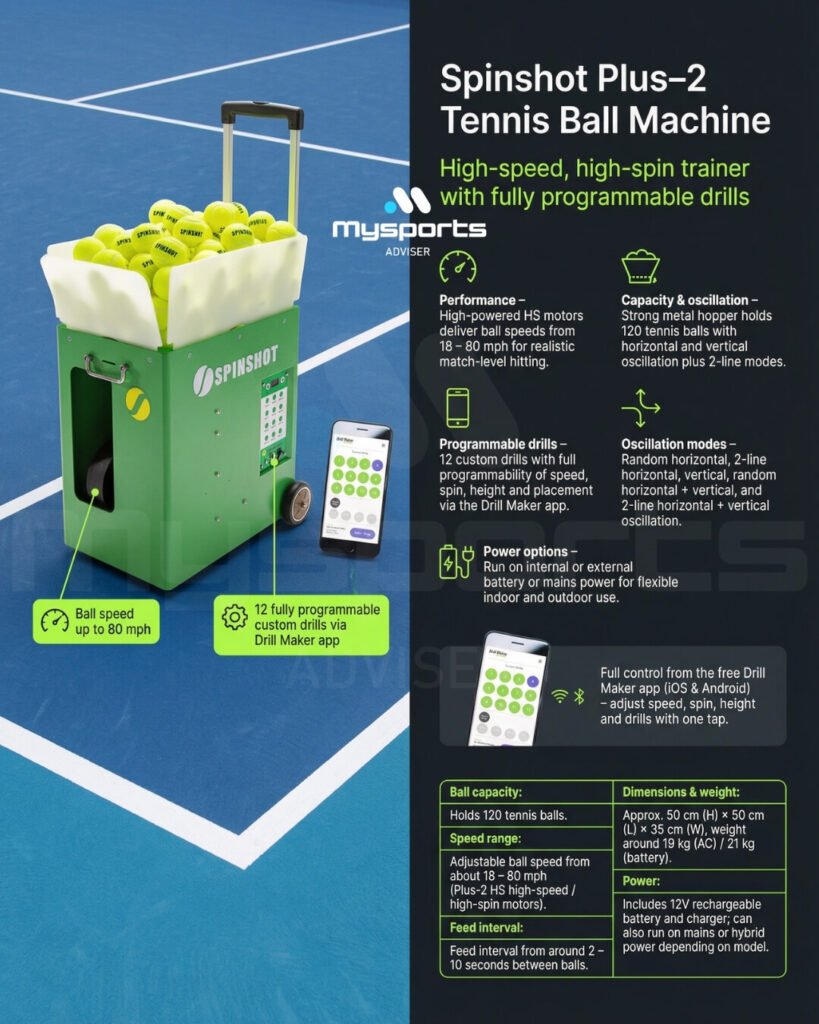
How to choose the right machine for your budget and goals
If you train alone once in a while, the best choice is rarely the most advanced one. If you train alone constantly, the balance shifts and AI starts to make more sense. Use this filter. If you want match realism and you enjoy data-driven practice, the Pongbot Pace S Pro is the bold choice. If you want proven programming without going fully traditional-basic, the Spinshot Plus 2 is the middle ground. If you want simple reliability and easy ownership, Titan Ace is the cleanest fit.Choose Pongbot if
You care about movement tracking, adaptive feeds, and the feeling that your solo practice is responding to you rather than repeating a script.Choose Spinshot Plus 2 if
You want a proven tennis ball machine with more flexibility than a bare-bones model, but you do not want to depend on a fully AI-driven ecosystem.Choose Titan Ace if
You want the least complicated machine in the group and you value straightforward operation over fancy training intelligence.First-time buyer: So which one should I buy if I'm not sure yet?
Dave - MySportsAdviser: If you're unsure, start with the machine that matches your tolerance for complexity. Low tolerance points to Titan Ace, balanced points to Spinshot Plus 2, and high appetite for tech points to Pongbot Pace S Pro.
Want the cleanest match between your budget, training style, and long-term use?
Get your recommendationFinal verdict: which machine should you buy?
If you want the most match-realistic solo practice and you are comfortable paying for a first-generation smart experience, the Pongbot Pace S Pro is the most ambitious option here. If you want a serious programmable machine that feels proven and practical, the Spinshot Plus 2 remains the balanced choice. If you want reliability first and complexity last, Titan Ace is the safer traditional buy. The decision is not about which machine looks smartest. It is about which one gives you the most useful training, the least regret, and the best chance of staying in your routine. AI or traditional? Choose the one you'll train with, not the one you'll just admire.
As a Sports Technology Analyst, Dave Court focuses on the intersection of performance, data-driven insights, and modern sports technology across multiple disciplines. With hands-on expertise in tennis and pickleball performance analysis, as well as experience in evaluating sports equipment, training systems, and active lifestyle solutions, he delivers practical, experience-based insights. Dave also creates expert content around sports-focused travel, training environments, and performance-oriented destinations, helping readers make informed decisions both on and off the field.
Choose the tennis ball machine that matches your game, your budget, and your patience for tech.
Prices and bundle conditions can change, and early AI adopters should verify support details before buying.
Compare your best optionFrequently Asked Questions
Is the Pongbot Pace S Pro better than Spinshot Plus 2 for solo practice?
For match realism, yes, because Pongbot is built to adapt more dynamically. For long-term simplicity and lower ownership stress, Spinshot Plus 2 is often the easier buy.Is Titan Ace still good enough for competitive players?
Yes. If you want consistent feeds and a traditional training base, Titan Ace can still support serious work, especially if your drills are well planned.Should I buy AI now or wait until the category matures?
If you want the newest training experience and accept some early-adopter risk, AI can be worth it now. If you want the most proven path, waiting or choosing a traditional model is the safer decision.About the author: